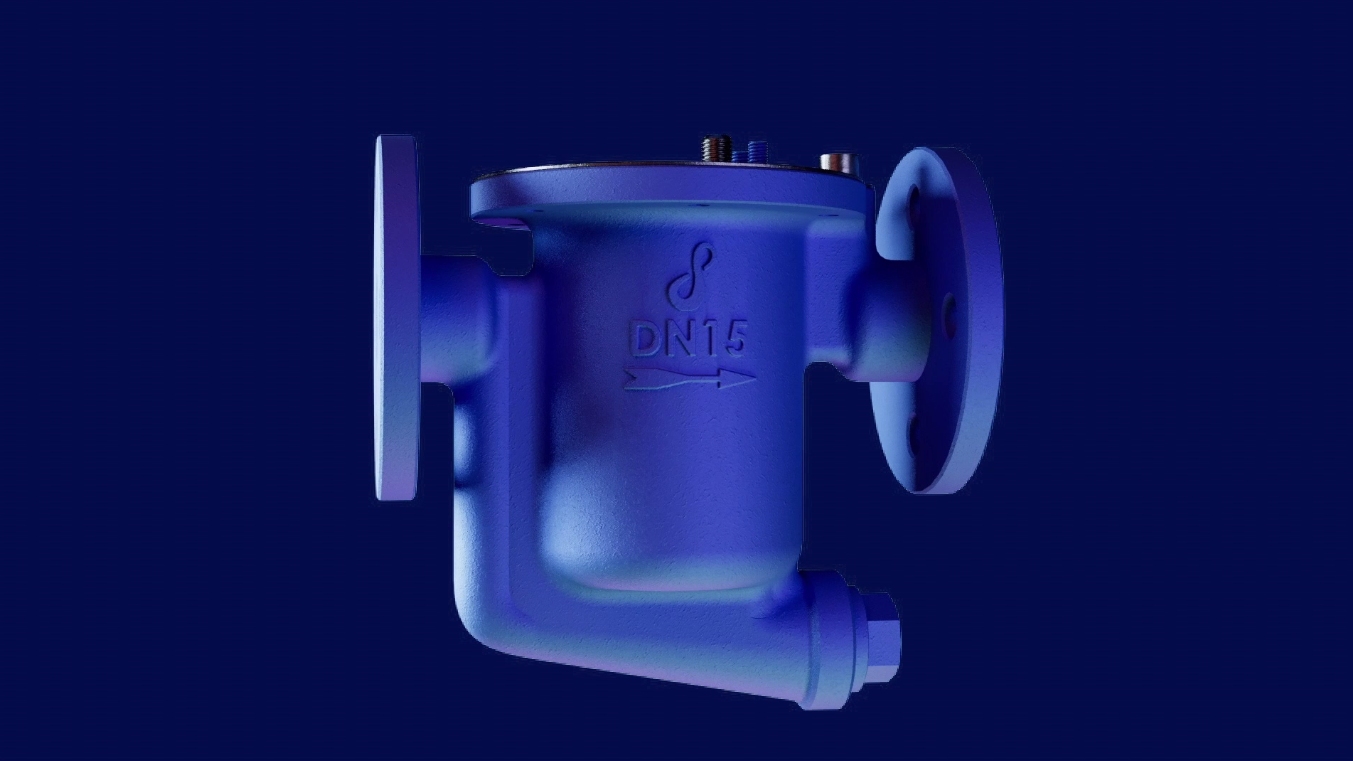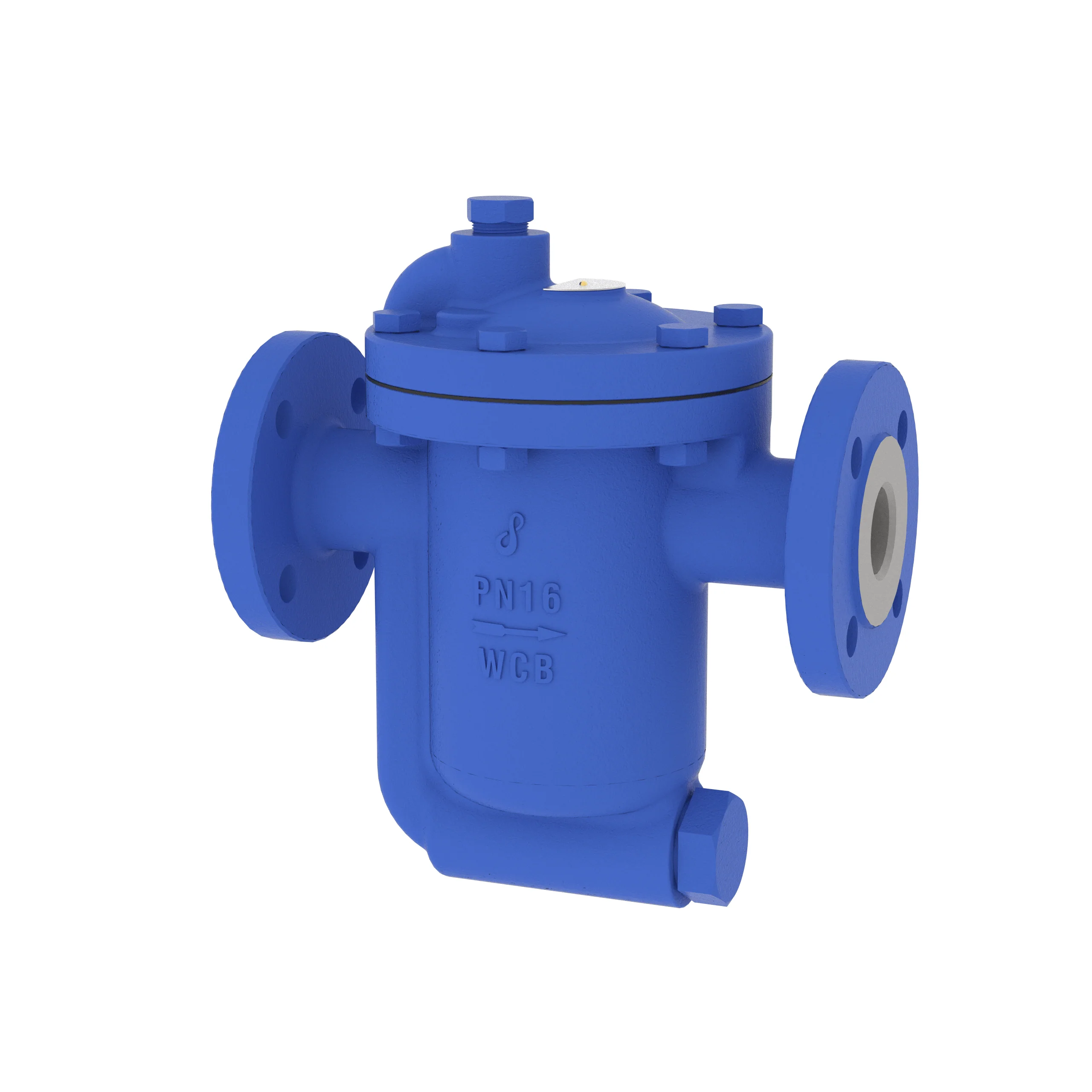
Inverted Bucket


The Inverted Bucket Steam Trap by Spenomatic Energy Solutions is a highly efficient condensate removal device designed to handle saturated and superheated steam systems. Its inverted bucket mechanism ensures efficient discharge of condensate, air, and non-condensable gases, making it ideal for industrial applications.

Key Features & Benefits:

Highly Durable Construction – Made from alloy steel with a hardened valve core and seat for extended service life.
Built-in Stainless Steel Filter – Reduces installation costs and prevents debris accumulation.
Resistant to Water Hammer – The open stainless steel bucket prevents deformation and ensures long-term reliability.
Optional Built-in Check Valve – Enhances system efficiency and saves installation space.
Low Failure Rate – Valve components are located at the top of the body, reducing the risk of impurity buildup.
Versatile Connection Options – Available in screwed or flanged configurations for easy installation.

Technical Specifications:

  • Max Operating Pressure (PMO): 17 bar
  • Max Operating Temperature (TMO): 230°C
  • Sizes Available: DN15 – DN65
  • Connections: Flanged (DIN, ASME), Screwed (BSP,NPT)
    Contact us for custom connections
  • Models: SKLIB211, SKLIB214, SKLIB215, SKLIB216

Applications:

🔹 Steam Main Lines & Heat Tracing Systems
🔹 Boiler Sub-Cylinders & Steam-Water Separators
🔹 Jacketed Kettles & Heat Exchangers
🔹 Food & Beverage, Pharmaceutical, and Textile Industries
🔹 Tobacco, Steel, Paper, and Chemical Manufacturing

Refer to the product catalogue for more details.

steam traps in Kenya

Inverted Bucket Steam Traps for Kenya and African Industry

Inverted Bucket Steam Traps solutions in Kenya need to match the realities of local steam, process, and utility systems while remaining dependable across wider African industrial sites. Built around German quality expectations, the details below combine precise engineering, durable materials, efficient operation, and practical maintenance guidance for teams comparing steam traps Kenya suppliers, steam traps Africa applications, and long-life Inverted Bucket Steam Traps performance.

Inverted Bucket Steam Traps with German quality standards for African process plants
steam traps in Kenya

STEAM SYSTEM FUNDAMENTALS

  • Steam Traps
  • Why we need them, the main types, their pros & cons, and how to select the right trap for each application
  • Includes animated operation
  • (GIFs play in PowerPoint / Microsoft 365)
Steam Traps solution for Kenya steam and process systems
steam traps across Africa

THE PROBLEM

  • Why Do We Need Steam Traps?
  • As steam gives up its latent heat it condenses into water (condensate). Air and other non-condensable gases also collect in the system. A steam trap is an automatic valve that removes condensate, air and CO₂ — while holding back live steam.
  • Remove condensate
  • Water-logging chills the process, slashes heat transfer and causes uneven heating.
  • Prevent water hammer
  • Slugs of condensate driven by steam can hammer pipework, damaging fittings and risking injury.
  • Vent air & gases
Inverted Bucket Steam Traps application image for energy and manufacturing facilities in Africa
African steam traps applications

CLASSIFICATION

  • Three Operating Principles
  • Steam traps are grouped by what physical difference they sense between steam and condensate.
  • Mechanical
  • Senses DENSITY difference
  • Float & inverted-bucket traps. Condensate (dense) and steam (light) move a float or bucket to open/close the valve.
  • Thermostatic
  • Senses TEMPERATURE
Steam Traps product detail from Spenomatic Energy Solutions
Kenya industrial systems

MECHANICAL — TYPE 1B

  • Inverted Bucket Trap
  • ▶ Animated — plays in slideshow
  • Floats when steam is trapped under it (valve shut) and sinks when condensate fills it (valve opens). A robust mechanical workhorse.
  • Advantages
  • Very reliable; tolerates dirty steam & water hammer
  • Good for high-pressure / superheated steam mains
  • Discharges at steam temperature — efficient
Inverted Bucket Steam Traps for industrial sites in Kenya
Africa process plants

AT A GLANCE

  • Type Comparison
  • Property
  • Float-Thermostatic
  • Inverted Bucket
  • Thermostatic
  • Thermodynamic
  • Sensing
Inverted Bucket Steam Traps with German quality standards for African process plants
steam traps in Kenya

SELECTION GUIDE

  • Where to Use Which Trap
  • Match the trap to the application's load behaviour, pressure and environment.
  • Steam mains & distribution drip legs
  • Use: Thermodynamic (disc) or inverted bucket
  • Small intermittent condensate, high pressure, outdoor freeze-tolerance needed.
  • Heat exchangers & process heating
  • Use: Float & Thermostatic
Steam Traps solution for Kenya steam and process systems
steam traps across Africa

WHAT GOES WRONG

  • The Two Failure Modes
  • Every steam trap eventually fails in one of two ways. Knowing which tells you what symptom to look for — and what it is costing you.
  • Failed OPEN —
  • wastes steam (efficiency loss). Often silent and invisible, so it can run for months.
  • Failed CLOSED —
  • floods the process (production loss, water hammer). Usually noticed quickly.
Inverted Bucket Steam Traps application image for energy and manufacturing facilities in Africa
African steam traps applications

FAILURE ANALYSIS

  • How Each Trap Type Fails
  • The failure mechanism is specific to the design — know the weak point of the trap you have installed.
  • Float & Thermostatic
  • Punctured float or worn seat — usually fails OPEN.
  • Inverted Bucket
  • Loses water-seal prime on pressure drop — fails OPEN.
  • Thermostatic
Steam Traps product detail from Spenomatic Energy Solutions
Kenya industrial systems

TROUBLESHOOTING

  • Symptom → Likely Cause
  • Read the symptom in the field, then work back to the probable cause and first action.
  • Symptom observed
  • Likely cause
  • First action
  • Cold trap / no discharge
  • Air-bound, blocked strainer, or valve jammed shut
Inverted Bucket Steam Traps for industrial sites in Kenya
Africa process plants

MAINTENANCE

  • How to Test a Steam Trap
  • No single method is conclusive — combine two or more. Survey traps on a regular schedule; a typical plant has 3–10% failed at any time.
  • Temperature
  • Compare inlet vs outlet with an IR/contact probe. A cold trap may be blocked; outlet near steam temp can signal blow-through.
  • Ultrasonic
  • Listen with an ultrasonic detector. A continuous high-frequency rush usually means steam is leaking through (failed open).
  • Visual / sight glass
Inverted Bucket Steam Traps with German quality standards for African process plants
steam traps in Kenya

DECIDE FAST

  • Quick Selection Logic
  • Variable / modulating load?
  • → Float & Thermostatic
  • Drip leg on a steam main?
  • → Thermodynamic disc
  • High pressure or dirty steam?
  • → Inverted bucket

Product Documents

Related Items