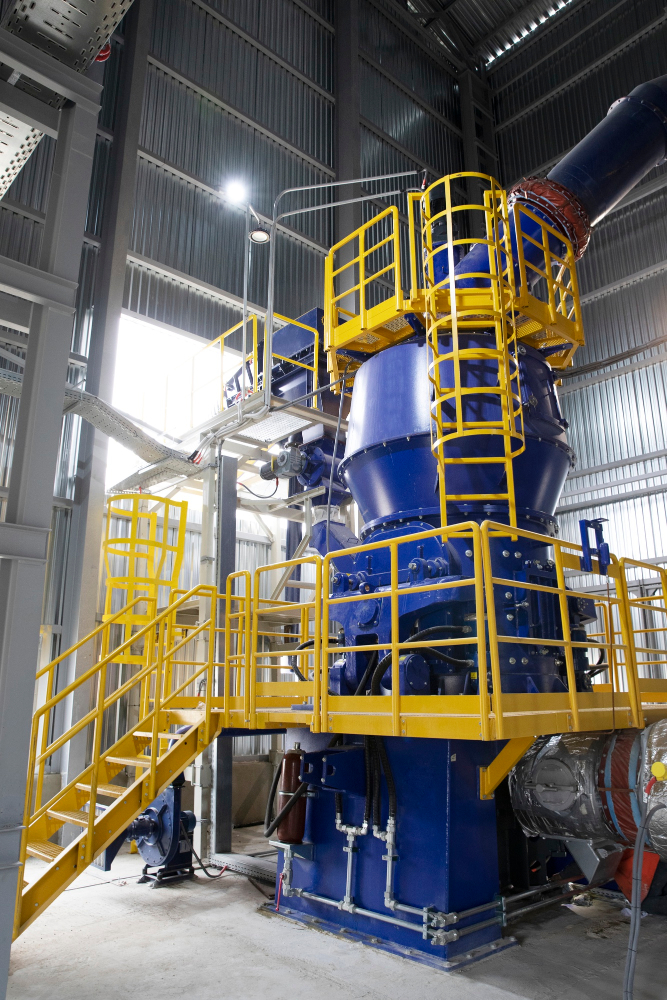

How one small component can cost your factory thousands every day
Every day, factories lose money through a component many people never think about.
It isn’t the boiler. It isn’t the burner. It isn’t even the fuel itself.
In many steam systems, the biggest hidden source of energy loss is a failed or incorrectly selected steam trap.
Because steam traps operate automatically and often out of sight, they rarely receive attention until something goes wrong. Unfortunately, by the time a problem becomes obvious, valuable steam may have been escaping for weeks — or even months.
For manufacturers across East Africa, that can translate into higher biomass consumption, reduced process efficiency, unexpected maintenance costs, and inconsistent product quality.
The good news is that these losses are almost entirely preventable.
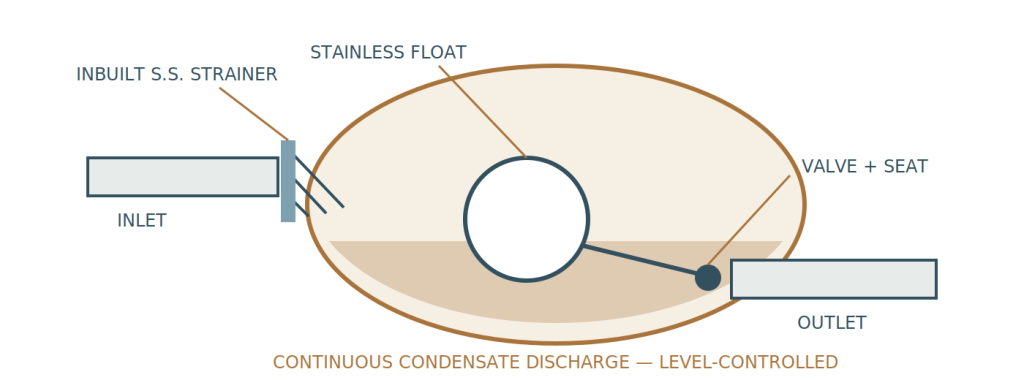
Fig. 01 — Where the steam trap sits in the steam loop: every kilogram of live steam represents fuel already paid for.
WHAT IS A STEAM TRAP?
A steam trap is an automatic valve designed to perform one very important job: it removes condensate, air, and other non-condensable gases from a steam system while preventing valuable live steam from escaping.
As steam transfers heat to production equipment, it naturally condenses back into hot water. If that condensate is not removed quickly, it begins to reduce heat transfer efficiency, causes water hammer, and increases corrosion inside the system.
The steam trap continuously removes this condensate while keeping live steam where it belongs — inside your process.
In other words, a steam trap protects both your energy investment and your production efficiency.
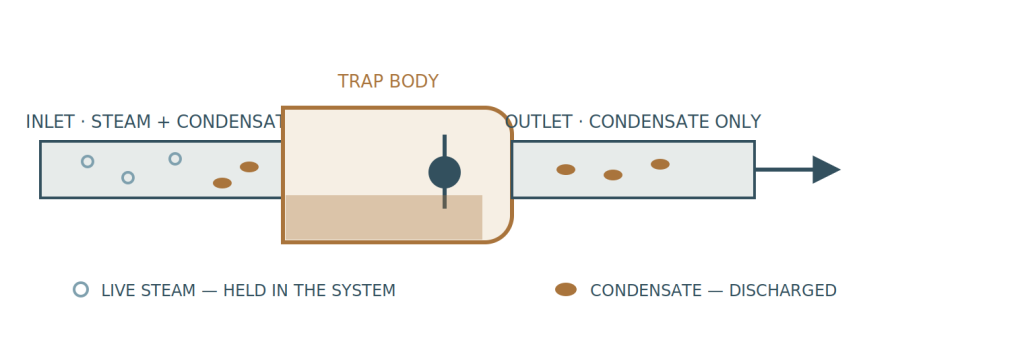
Fig. 02 — A steam trap passes condensate while holding back live steam.
WHY STEAM TRAPS MATTER MORE THAN MOST PEOPLE REALISE
Every kilogram of steam generated by your boiler represents fuel that has already been paid for. When steam escapes through a failed trap, the boiler must work harder to replace that lost energy. The result is often:
- Higher biomass consumption
- Longer heating times
- Reduced production efficiency
- Increased boiler loading
- Higher operating costs
In many facilities, these losses remain unnoticed because the escaping steam is not always visible. That is why regular steam trap inspections form an important part of any effective energy management programme.
The importance of steam traps at a glance
A correctly selected, correctly working steam trap is not a minor accessory — it sits at the centre of four things every plant manager cares about:
Energy efficiency — keeps paid-for steam inside the process and returns hot condensate to the boiler feed tank, cutting biomass consumption.
System protection — removes condensate before it causes water hammer, erosion, and corrosion in pipework and control valves.
Product quality — maintains stable heat transfer and process temperatures, so batches heat evenly and consistently.
Safety — prevents slugs of condensate being driven at high velocity through the system — a leading cause of steam-line accidents.
CHOOSING THE RIGHT STEAM TRAP FOR THE RIGHT JOB
Not every steam trap is designed for the same application. Selecting the correct type is just as important as maintaining it.
1. Thermodynamic Steam Trap
The thermodynamic steam trap is one of the simplest and most robust designs available. With only one moving part, it offers excellent durability. Its compact design makes maintenance straightforward while providing reliable operation across a wide pressure range.
Best for: steam mains · distribution lines · high-pressure applications · outdoor installations
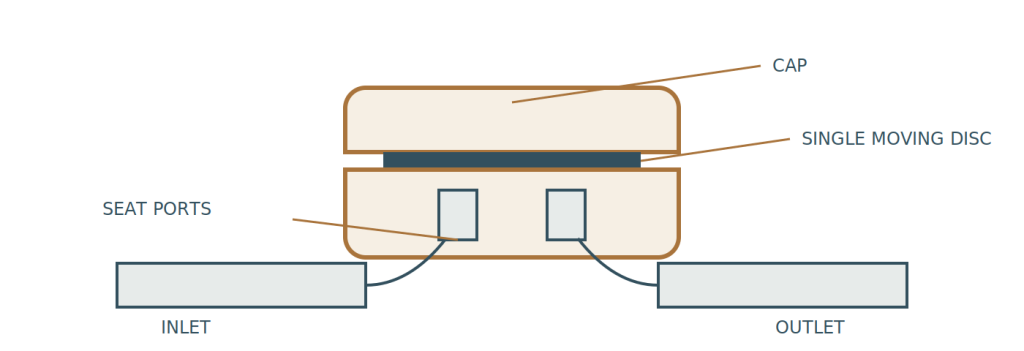
Fig. 03 — Thermodynamic disc trap: a single moving disc over seat ports.
[ PHOTO SLOT — insert Spenomatic thermodynamic steam trap product photo ]
2. Ball Float Steam Trap with Inbuilt Strainer
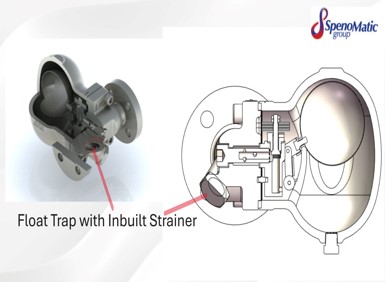
For process equipment such as heat exchangers and jacketed vessels, the ball float steam trap provides continuous condensate removal. Unlike conventional float traps, the Spenomatic design incorporates an integrated stainless-steel strainer, which:
- Eliminates the need for a separate inline strainer
- Reduces installation costs and minimises piping joints
- Protects internal components from debris
- Simplifies maintenance
By combining two essential functions into one unit, manufacturers benefit from lower installation costs and improved long-term reliability.
Best for: heat exchangers · jacketed vessels · process equipment needing continuous drainage
Fig. 04 — Ball float trap with integrated stainless-steel strainer at the inlet.
[ PHOTO SLOT — insert Spenomatic ball float steam trap product photo ]
3. Inverted Bucket Steam Trap
Where steam systems experience dirty steam, water hammer, or demanding operating conditions, the inverted bucket steam trap provides exceptional reliability. Because the operating mechanism is naturally resistant to harsh conditions, it remains one of the most dependable trap designs available.
Best for: steam mains · high-pressure systems · industrial process plants · heavy-duty applications
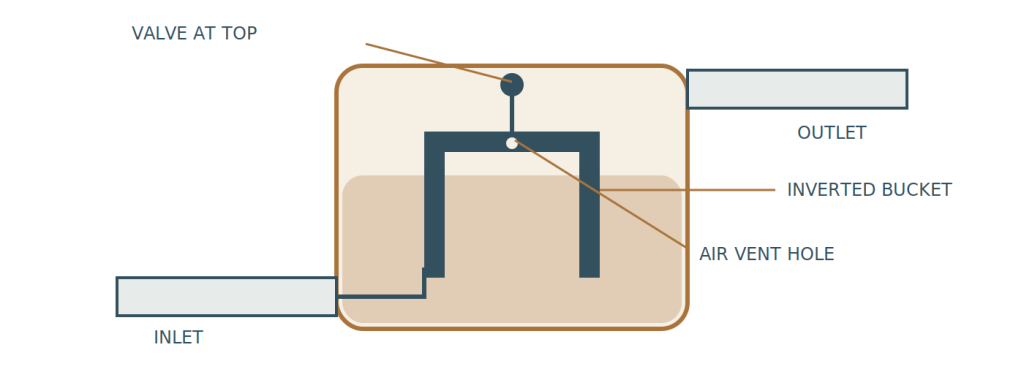
Fig. 05 — Inverted bucket trap: the rising bucket closes the top-mounted valve.
[ PHOTO SLOT — insert Spenomatic inverted bucket steam trap product photo ]
CASE STUDY: WHAT ONE FAILED 25 NB TD TRAP REALLY COSTS
To make the cost of trap failure concrete, consider a typical scenario we encounter during steam trap surveys in East African factories.
A biomass-fired boiler plant distributes steam at 8 bar g. On the steam main, a 25 NB (DN25) thermodynamic trap has failed with its disc stuck open. Because the discharge goes to the condensate line rather than to atmosphere, nobody on the plant floor notices anything — the trap simply blows live steam, continuously, around the clock.
| PARAMETER | ASSUMPTION | VALUE |
| Trap | 25 NB thermodynamic, steam main drip point | DN25 TD |
| Operating pressure | Steam main | 8 bar g (9 bar a) |
| Failure mode | Disc failed open | Blow-through |
| Effective seat orifice | Typical for DN25 TD trap | ≈ 5 mm |
| Steam loss rate | Napier orifice flow × 50% discharge factor | ≈ 28 kg/h |
| Operating hours | Continuous process | 8,000 h/yr |
| Annual steam loss | 28 kg/h × 8,000 h | ≈ 224 t/yr |
| Boiler evaporation ratio | Biomass-fired, typical | ≈ 4 kg steam / kg fuel |
| Extra biomass burned | 224 t ÷ 4 | ≈ 56 t/yr |
| Annual fuel cost of one failed trap | @ KES 4,000 per tonne biomass | ≈ KES 224,000/yr |
Illustrative figures based on typical values. Actual losses depend on your operating pressure, running hours, boiler efficiency, and fuel price — a steam trap survey establishes the real numbers for your plant. Additional costs (make-up water, water treatment, and extra boiler loading) are not included above.
Scale it up
A single failed DN25 TD trap quietly burns roughly 56 tonnes of biomass a year — fuel that produced no product at all. A medium-sized plant typically operates 50–100 traps, and industry surveys routinely find 15–25% of traps failed in systems without a testing programme. Ten failed traps of this size can mean millions of shillings in wasted fuel every year — more than enough to fund a complete survey and replacement programme many times over.
The resolution in cases like this is straightforward: the failed trap is identified during a survey (typically by ultrasonic and temperature testing), replaced with a correctly sized German-standard thermodynamic trap, and the payback on the replacement is measured in weeks, not years.
FIVE WARNING SIGNS YOUR STEAM TRAP MAY BE FAILING
Many steam trap failures can be detected long before they become expensive. Watch for these common warning signs:
- Increased biomass consumption without increased production
- Water hammer within the steam system
- Slow or uneven heating
- Steam continuously venting from condensate lines
- Unexpected increases in maintenance costs
Any one of these symptoms may indicate that your steam system requires inspection.
STEAM TRAP FAILURE DOESN’T JUST WASTE STEAM
A failed steam trap creates a chain reaction throughout the entire steam system. It can lead to poor pressure control, reduced heat transfer, condensate accumulation, corrosion, equipment damage, product quality issues, and increased downtime.
The financial impact often extends far beyond the cost of replacing the trap itself.
WHY STEAM TRAP SURVEYS ARE WORTH THE INVESTMENT
One of the simplest ways to improve steam system efficiency is to carry out regular steam trap surveys. A professional inspection helps identify:
- Failed-open and failed-closed traps
- Incorrect trap selection and oversized traps
- Missing strainers and installation errors
- Opportunities for energy savings
These small improvements often deliver rapid payback through reduced fuel consumption and improved plant performance.
WHY CHOOSE SPENOMATIC ENERGY SOLUTIONS?
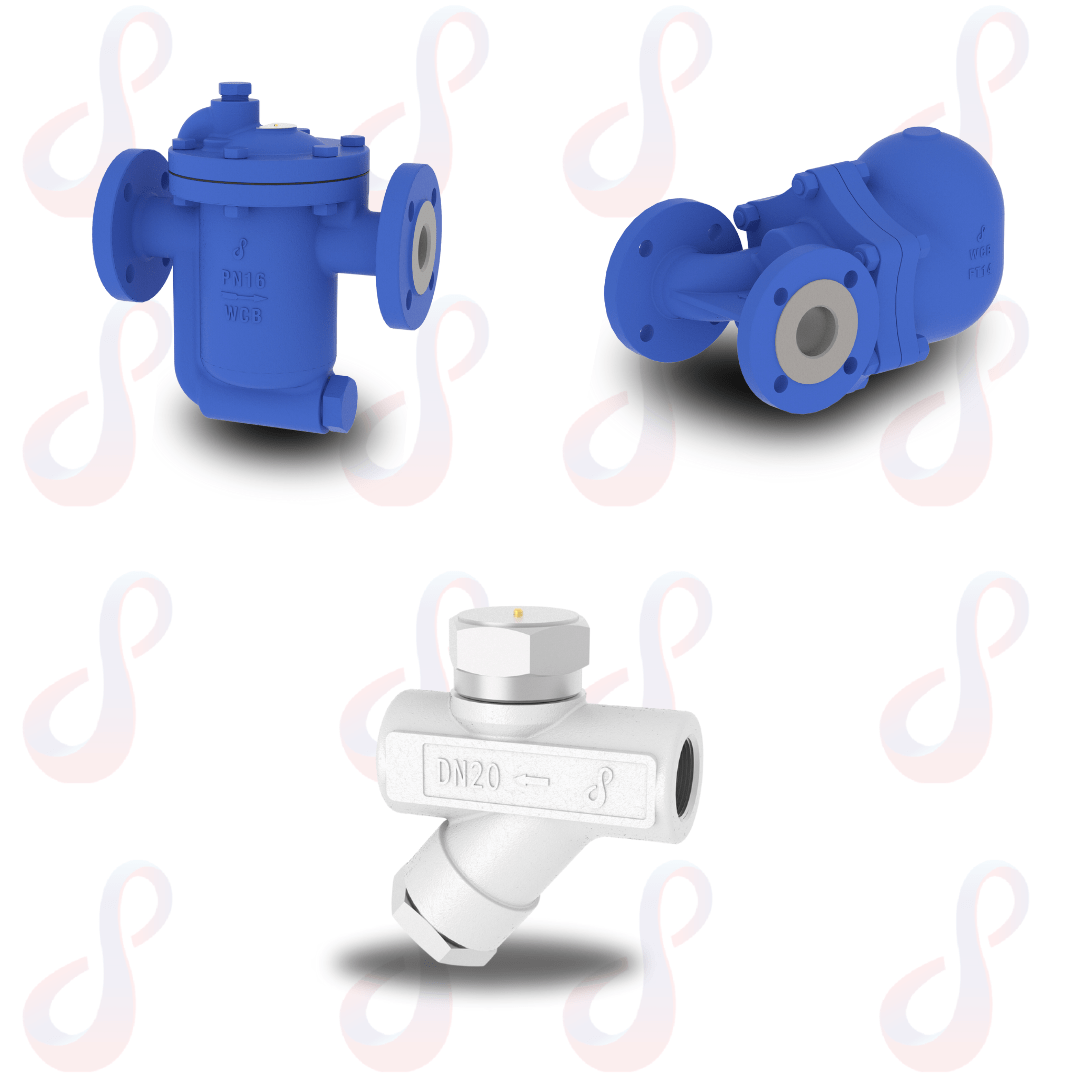
At Spenomatic Energy Solutions, we supply German-standard steam traps in Kenya engineered for reliability, efficiency, and long service life — thermodynamic, ball float with inbuilt strainer, and inverted bucket designs.
Beyond supplying equipment, our engineering team helps manufacturers evaluate existing steam systems, identify energy losses, recommend the correct steam trap for every application, and optimise overall steam performance.
Whether your objective is reducing biomass consumption, improving process efficiency, or extending equipment life, selecting the right steam trap is one of the smartest investments you can make.
[ PHOTO SLOT — team on site / steam trap survey in progress ]
BOOK A FREE STEAM SYSTEM ASSESSMENT
If your factory has not carried out a steam trap survey recently, there is a good chance hidden energy losses are already affecting your operating costs.
Our engineers can inspect your steam system, identify failed or incorrectly selected traps, and recommend the most appropriate German-standard steam trap solution for your application.